

Commercial Exterior Cleaning for Shopping Centers
Exterior cleaning programs for anchored shopping centers — shared walkways, parking fields, and tenant frontages maintained as one coordinated property.
- 🏢100% commercialProperties and portfolios are all we serve — no residential work.
- 📍All of Northern California25 counties and 183 communities covered.
- 🌙Off-hours schedulingNight, weekend, and after-hours work around your operation.
- 📋Per-visit documentationWritten record for every property file.
Shopping Centers: Industry Overview
Anchored shopping centers concentrate enormous daily foot and vehicle traffic onto shared surfaces that no single tenant owns: the walkways connecting storefronts, the parking field everyone crosses, the covered arcades, and the entry features that identify the center from the street. When those shared surfaces look neglected, every tenant's business absorbs the impression — which is why exterior cleaning at shopping centers is managed at the property level and funded through common area maintenance.
Power Wash NorCal maintains shopping centers across Northern California as coordinated, full-property programs. A single scheduled visit can cover tenant walkway frontages, shared parking and drive aisles, dumpster corrals, and monument signage — phased during pre-opening hours so shoppers and tenant deliveries are never disrupted.
Common Cleaning Challenges
Shopping centers combine the buildup patterns of every tenant type on one shared property, concentrated where customer traffic is heaviest.
- Gum ground into walkways along the entire tenant line
- Oil staining spread across large shared parking fields
- Grease migrating onto common walkways from restaurant tenants
- Organic buildup under covered arcades and overhangs
- Staining around shared dumpster corrals used by many tenants
Request a Free Estimate
Ready to discuss an exterior cleaning program for your shopping centers property?
Request a Commercial QuotePlan Your Program
See our Shopping Center Maintenance Guide for scheduling and budgeting guidance.
Not sure which method your surfaces need? Read Power Washing vs. Pressure Washing.
Real Northern California Project Work
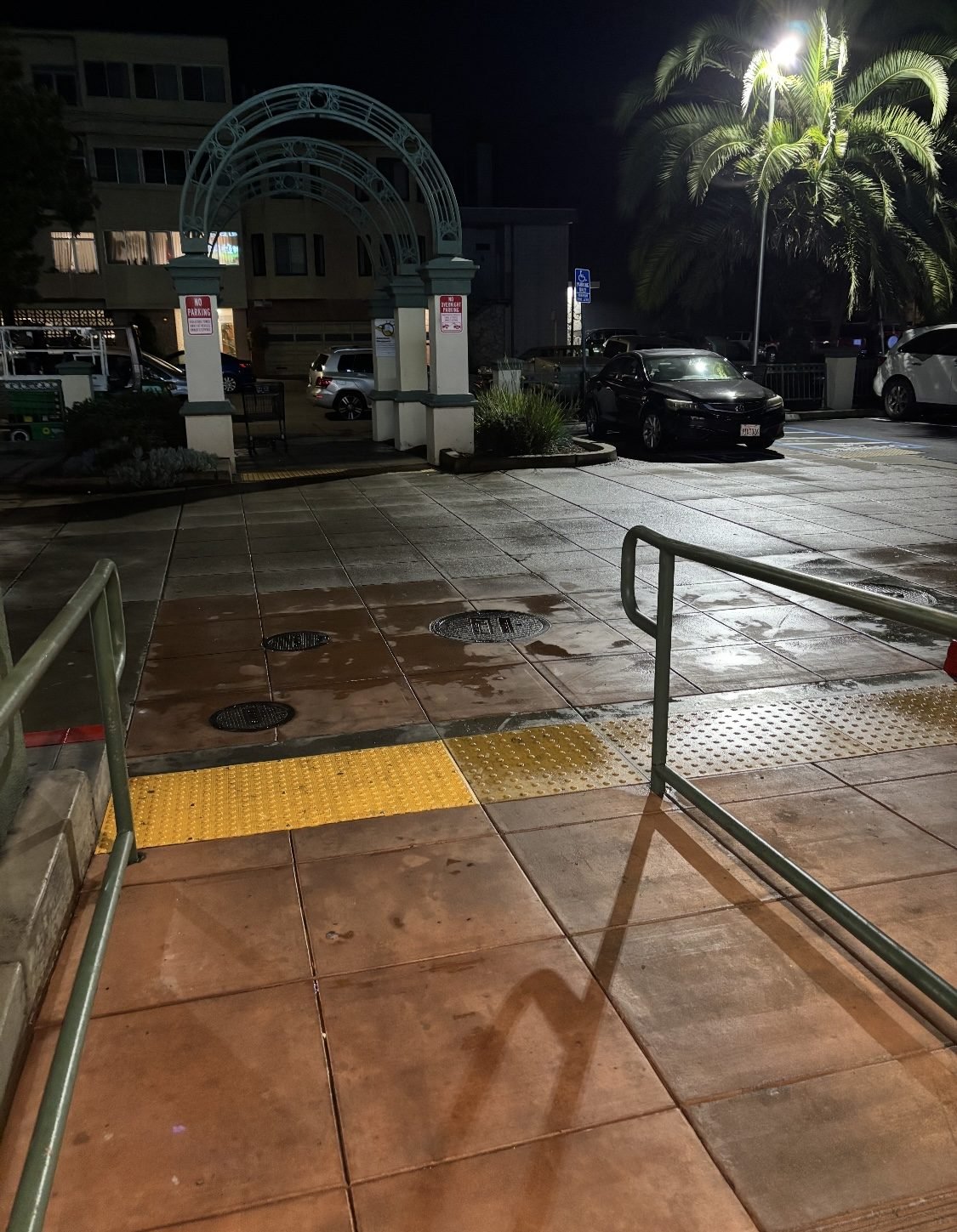
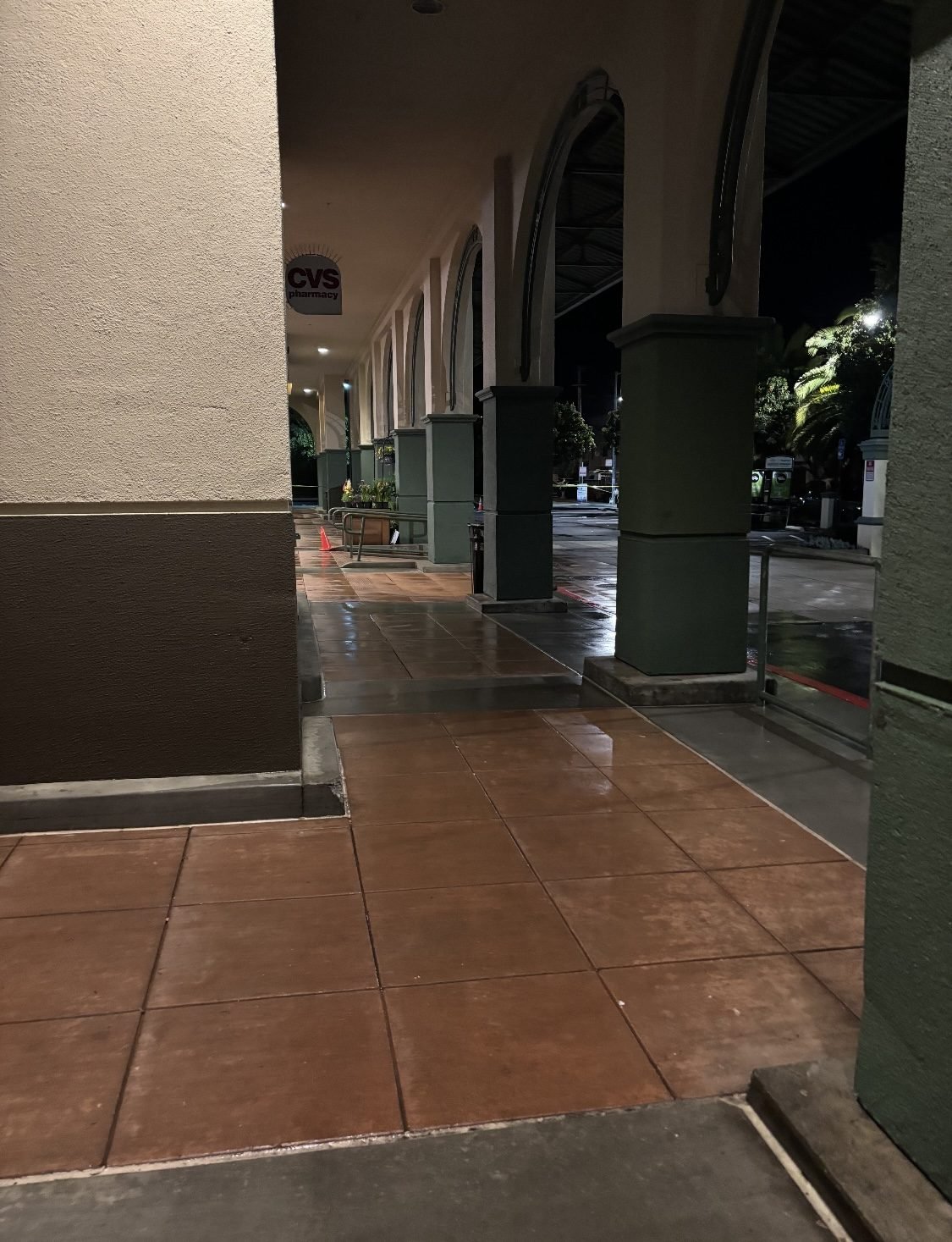
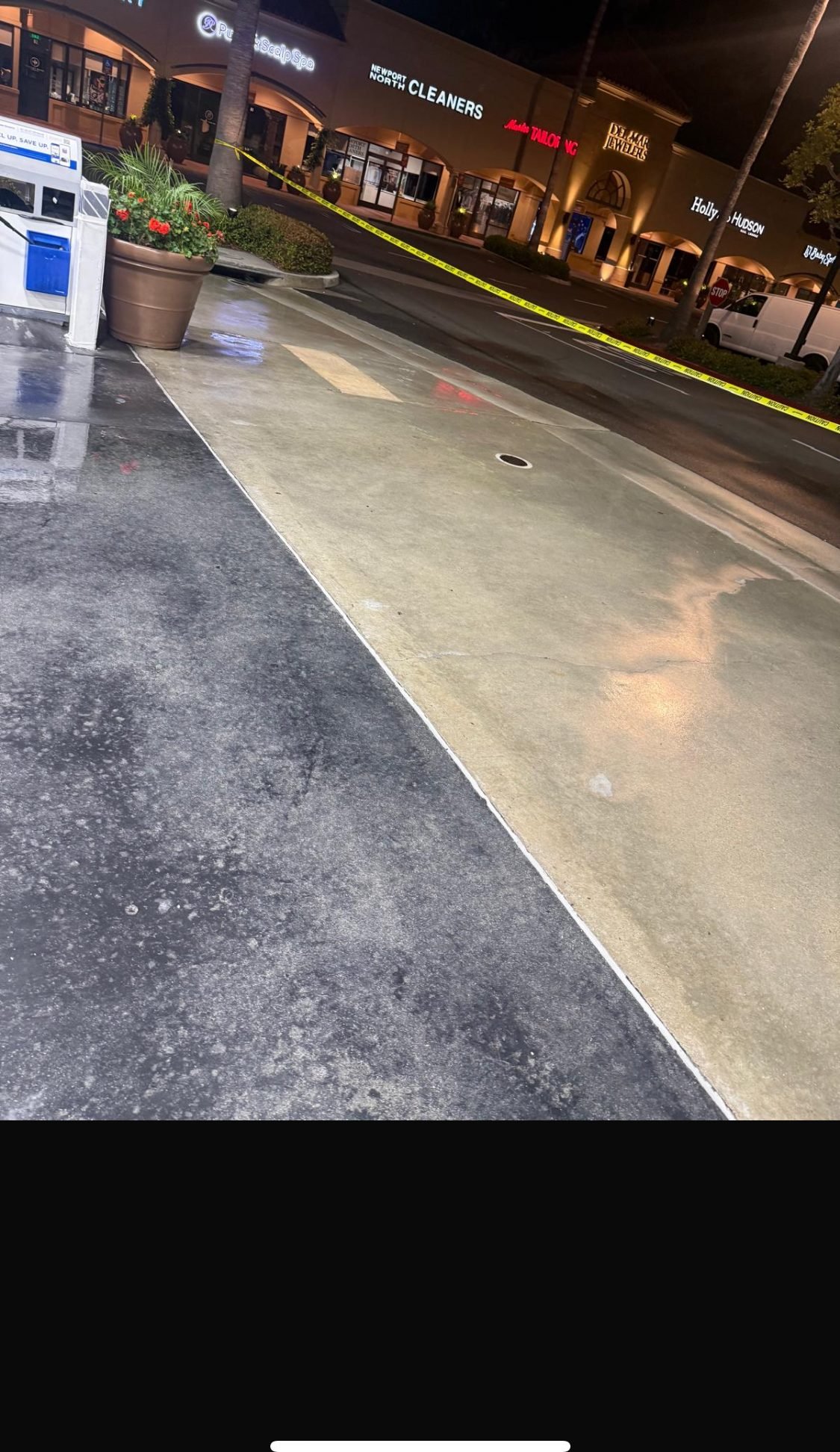
Original project photography from Power Wash NorCal engagements — our jobs, our equipment, our camera.
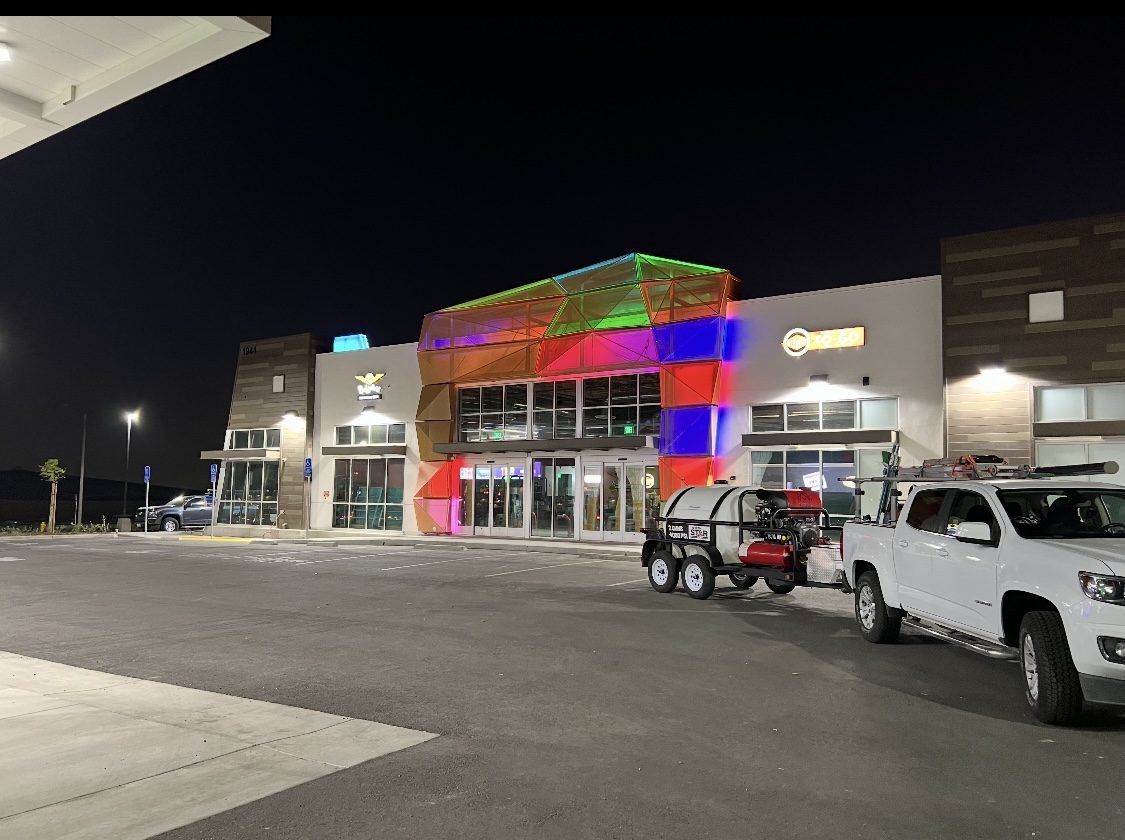
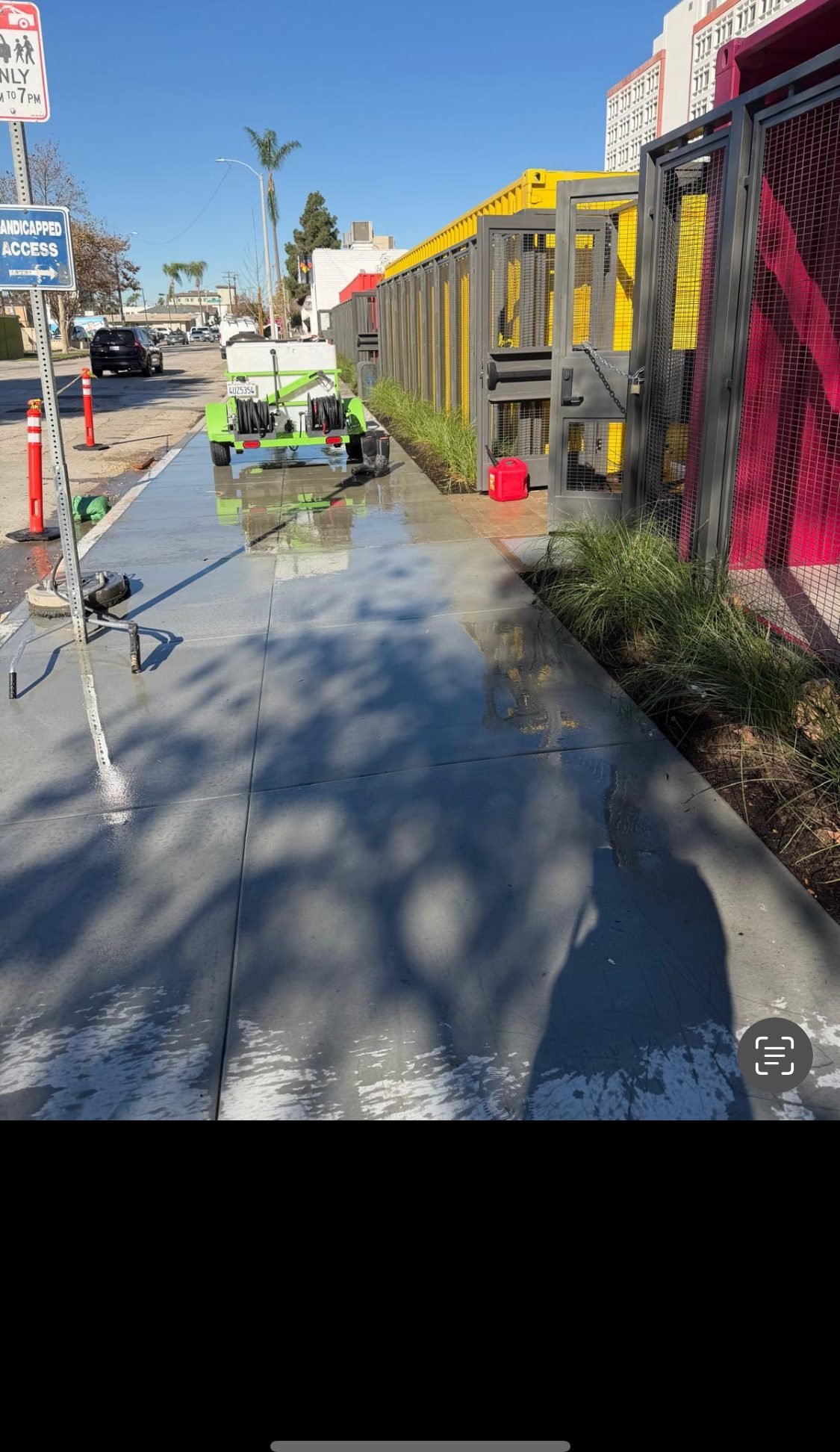
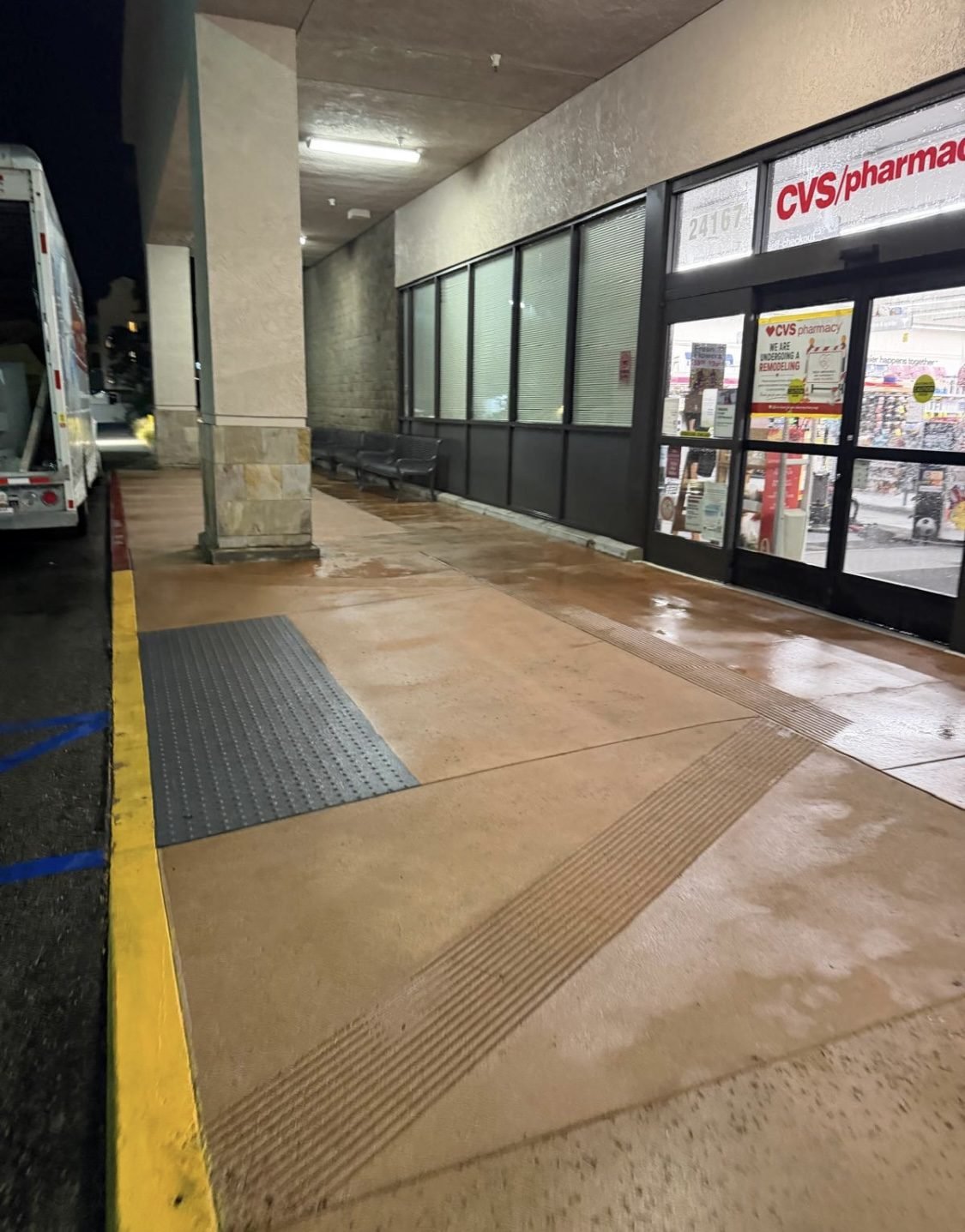
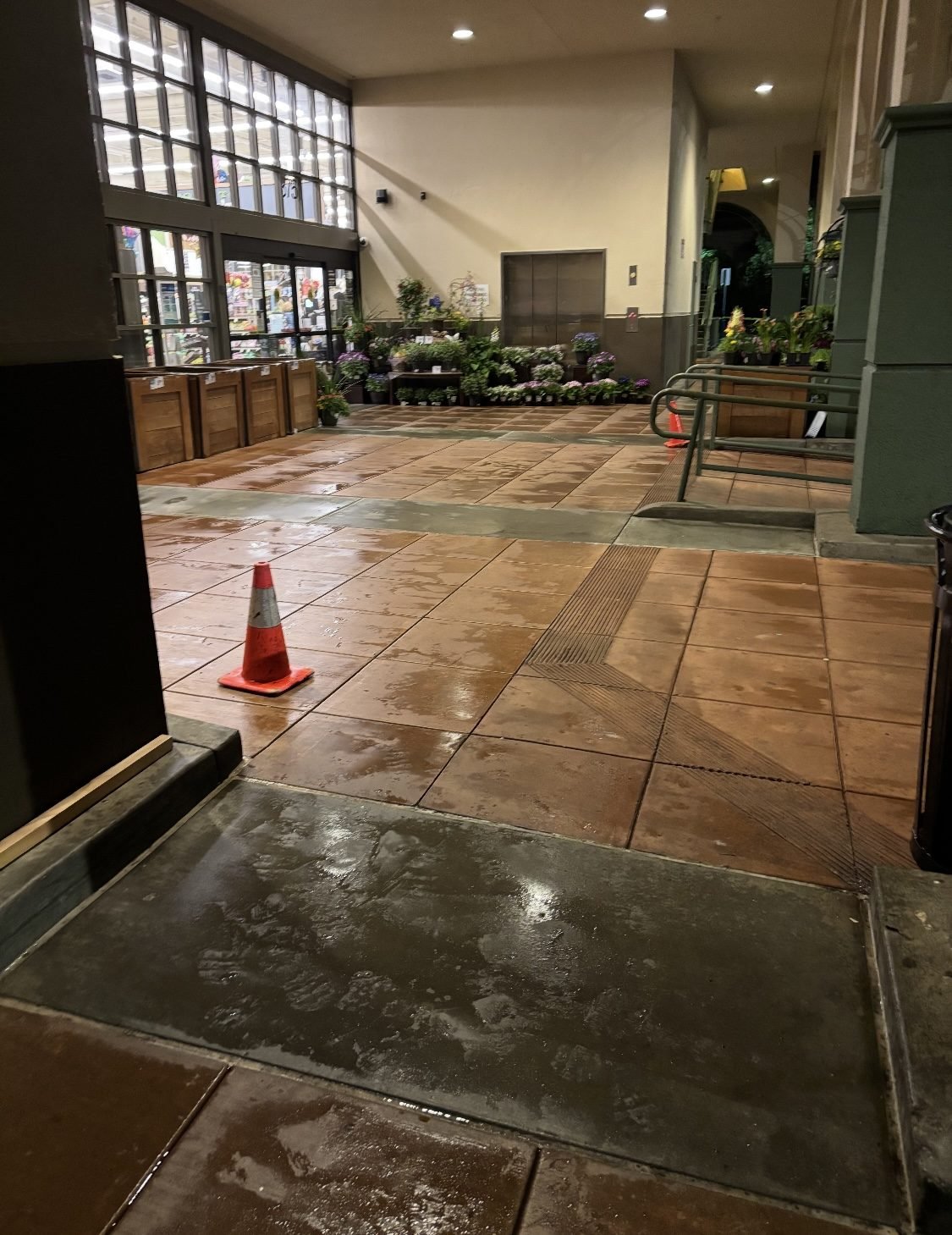
How Our Services Apply to Shopping Centers
Pressure Washing
The baseline method for walkways, hardscape, and general common-area surfaces across the center.
Power Washing
Heated water for grease zones near restaurant tenants and food court exits.
Sidewalk Cleaning
Gum and foot-traffic grime removal along the storefront walkway every customer uses.
Parking Lot Cleaning
Overnight cleaning of the shared parking field, drive aisles, and cart corral areas.
Storefront Cleaning
Consistent frontage cleaning across every tenant so the center presents uniformly.
Concrete Cleaning & Oil Stain Removal
Targeted treatment of oil-stained stalls and stained entry plazas.
Dumpster Enclosure Cleaning
Recurring service for shared corrals that accumulate grease and odor from multiple tenants.
Building Exterior Cleaning
Facade, tower feature, and monument sign cleaning that keeps the center's identity visible.
Our Cleaning Methods for Shopping Centers
Shopping centers are cleaned zone by zone with the method each surface needs: hot-water power washing where restaurant tenants deposit grease, surface cleaners for uniform results across long walkway runs, targeted degreasers and hot water on oil-stained stalls, and lower-pressure washing on decorative entry hardscape and monument surrounds. Wash water is managed toward landscape and containment rather than storm drains, and work is sequenced so cleaned sections dry before the center's earliest foot traffic arrives.
Recommended Cleaning Frequency
Most centers put shared walkways and high-traffic common areas on a quarterly cycle, parking fields on a semi-annual cycle with targeted oil-stain visits between, and dumpster corrals on a monthly-to-quarterly cycle depending on the tenant mix. Centers with several restaurant tenants typically need the tighter end of each range.
Typical Contaminants
- Chewing gum compressed into walkway concrete
- Vehicle oil and transmission fluid in parking stalls
- Restaurant grease tracked onto shared walkways
- Algae and mildew under shaded arcades
- Food and beverage spills near seating and gathering areas
Benefits of Professional Cleaning
- One coordinated program replaces piecemeal tenant-by-tenant cleaning
- Uniform appearance across every storefront supports leasing and renewals
- Slip-hazard reduction on the walkways carrying the center's densest foot traffic
- Predictable, CAM-ready costs with itemized scopes
- Buildup never reaches the point of requiring costly restoration cleaning
Protecting Property Value
A shopping center's value is a function of its rent roll, and its rent roll is a function of how the property shows. Tenants negotiating renewals walk the common areas before they walk into the leasing office, and appraisers photograph the same walkways shoppers do. Beyond perception, there's physics: gum, grease, and oil left in place chemically bond with concrete, turning a cleaning line item into a grinding-and-resurfacing capital expense. A center that holds its quarterly cycles typically pushes major hardscape replacement years further out — a deferral worth far more than the program costs.
Safety Considerations
The storefront walkway is the highest-pedestrian-density surface on the property, and gum, grease, and algae there translate directly into slip exposure. Routine removal — along with degreasing around food tenants and keeping cart paths and curb ramps clean — addresses the center's most concentrated premises-liability zones. Work is staged with cones and phased sections so early-morning walkers and delivery crews always have a clear path.
Maintenance Recommendations
The most effective shopping center programs establish a clean baseline with a full-property service, then hold it with a recurring calendar: quarterly walkways, semi-annual parking, monthly enclosure service where restaurant tenants warrant it. Reviewing the plan annually against tenant turnover keeps frequency matched to the actual buildup the current tenant mix generates. See our Shopping Center Maintenance Guide for a full planning framework.
Long-Term Maintenance & Seasonal Planning
Over a multi-year horizon, a shopping center's exterior program should track the property's own lifecycle events. Tenant turnover changes the buildup map — a new restaurant tenant moves its section onto a grease cycle; a departed anchor shifts traffic patterns and with them the wear. Northern California's seasons matter too: the first fall rains mobilize a summer's worth of accumulated oil across the lot, so a pre-rain fall service protects both drainage and stall appearance, while spring service resets the property ahead of peak retail foot traffic. Centers that keep a simple exterior log — what was cleaned, what was observed, what changed — turn each year's program into a better-tuned version of the last, and hand their eventual buyers a maintenance history instead of a question mark.
Why Power Wash NorCal
Commercial-grade equipment, experienced crews, and programs built around your operation — serving shopping centers properties across Northern California. About our company.
Shopping Centers: Frequently Asked Questions
Can the center stay open during cleaning?
Yes — work is phased during pre-opening and overnight hours by section, so no storefront or parking area is ever fully unavailable during business hours.
How is shopping center cleaning billed for CAM purposes?
Scopes are itemized by area and service so costs can be allocated cleanly through common area maintenance charges, with documentation suited to annual CAM reconciliation.
Do anchor tenants need separate arrangements?
Anchors sometimes maintain their own entrances under their leases; we coordinate scope boundaries with the property manager so covered and excluded areas are explicit.
What happens when a restaurant tenant creates recurring grease problems?
Grease-prone zones near specific tenants can be put on their own tighter cycle within the same program, and recurring problem areas are documented for the property manager.
Related Services
Related Industries
Where We Serve Shopping Centers
Working With Us on Commercial Property
The questions property and facility managers raise before engaging a vendor.
Can the work be completed overnight or outside business hours?
Yes. Night, weekend, and off-hours scheduling is standard on commercial property, and a substantial share of our work is done outside trading hours. Overnight windows are usually the right answer where the surface sits under customer or tenant traffic all day — forecourts, entries, drive-thru lanes, plazas, and service corridors.
Can service be scheduled around tenants and occupied operations?
Yes, and it is the normal case rather than the exception. Scheduling is coordinated around business hours, tenant activity, and facility operations, with access windows and constraints agreed before a date is set. On multi-tenant property, the sequence and notice arrangements are usually worked out with the property manager rather than imposed.
Can multiple properties or a whole portfolio be serviced?
Yes. Portfolios are a core part of what we do — the same specification applied across sites, with scheduling sequenced so properties are not competing for the same window. Consistency across a portfolio depends on writing the standard once and applying it per site, rather than negotiating each property separately.
How are recurring maintenance programs handled?
A recurring program sets the surfaces, the frequency per surface, and the trigger conditions for work outside the cycle, then schedules against your operating calendar. Frequencies differ by surface and property type — a drive-thru lane and an office elevation do not belong on the same interval — so the program is built from the property rather than from a package.
Can the work be performed without disrupting operations?
Usually, though it depends on the area. Most exterior surfaces can be worked in sections, phased, or scheduled outside operating hours so that access is never fully lost. Some areas genuinely cannot be closed at any time, and where that is the case the work is planned around short segments with an agreed stop-and-clear procedure rather than pretending the constraint is not there.
What happens if the results are not what was expected?
Work is reviewed against the agreed scope on site before the crew leaves, and anything outstanding is raised at that point. We do not advertise guaranteed removal outcomes — results depend on surface type, condition, the age of the staining, and access — so expected results are confirmed after the surface has been reviewed rather than promised in advance.
Our Process, Start to Finish
The same sequence on every commercial property, whether it is one surface or a portfolio.
Initial Contact
You send the property details. A team member responds by phone or email the same or next business day.
Site Evaluation
Where the scope needs it, we walk the property — surfaces, access, drainage, and the operating constraints around them.
Written Scope
You receive a written scope and estimate covering the surfaces, the method, and the schedule assumptions behind the price.
Scheduling
Work is scheduled around business hours, tenant activity, and facility operations — including nights and weekends where that fits better.
Site Preparation
Access, staging, water source, and wash-water capture are confirmed before equipment comes off the truck.
Service Execution
Method follows the surface and the buildup — unheated pressure washing, heated power washing, or a combination, assessed rather than assumed.
Quality Review
The work is reviewed against the agreed scope before the crew leaves, and anything outstanding is identified rather than left to be found later.
Documentation
A written record of the visit goes to the property file, so the maintenance history is available when it is needed.
What to Expect
What Happens After You Request a Quote
No sales sequence, no obligation. Here is the actual sequence.
- Same or next business day
- A team member reaches out by phone or email to confirm what you need and where the property is.
- A walk-through, a written scope, or a program proposal
- Whichever fits where you are. A single surface may only need a phone conversation; a portfolio usually warrants walking at least one site.
- Scheduling around your operation
- Access windows, tenant activity, delivery patterns, and after-hours constraints are agreed before a date is set — not discovered on the morning of the work.
- Arrival and setup
- The crew confirms access, staging, water source, and wash-water capture on arrival. As a mobile provider we bring the equipment and water handling to the property.
- Review before the crew leaves
- Work is checked against the agreed scope on site. Anything outstanding is raised at the time rather than left for you to find.
- A written record for the property file
- Every visit is documented, so the maintenance history exists when a lender, insurer, owner, or incoming manager asks for it.
What we don't do: we don't advertise guaranteed same-day arrival or guaranteed removal outcomes. Cleaning results depend on surface type, surface condition, the age of the staining, and site access — so timing and expected results are confirmed after the surface has been reviewed, not before.
How We Work on Occupied Commercial Property
- Commercial onlyProperties and portfolios are all we serve. No residential work, so scheduling and methods are built for occupied commercial sites.
- Scoped before work beginsSurface type, buildup, and the property's operating schedule determine the method — assessed on each job rather than applied from a template.
- Scheduled around operationsNight, weekend, and after-hours work where that protects trading hours, tenant activity, or facility operations.
- Wash-water handledCapture and compliant disposal built into the scope on surfaces that require it, rather than treated as an afterthought.
- Documented every visitA written record for the property file, so the maintenance history is available when it is asked for.
- Mobile across Northern CaliforniaWe travel to the property — 25 counties and 183 communities, with no storefront for you to visit.
Request a property assessment
We'll review the property against how this industry actually uses its exterior, and respond with next steps.
Request a Free Estimate Today
Contact Power Wash NorCal for a complimentary, no-obligation estimate and a maintenance program built for your operation.
Request a Commercial Quote