

Commercial Exterior Cleaning for Drive-Thrus
Dedicated drive-thru lane programs — oil track removal, order-point cleaning, and striping visibility for the highest-traffic pavement on the property.
- 🏢100% commercialProperties and portfolios are all we serve — no residential work.
- 📍All of Northern California25 counties and 183 communities covered.
- 🌙Off-hours schedulingNight, weekend, and after-hours work around your operation.
- 📋Per-visit documentationWritten record for every property file.
Drive-Thrus: Industry Overview
A drive-thru lane is a single strip of pavement that can carry more vehicles per day than a small parking lot — every one of them idling, braking, and creeping forward along the identical wheel path. The result is buildup unlike anywhere else on a commercial property: twin oil drip-lines tracing the queue, grease fallout at the window, tire film at every stop point, and striping that disappears under grime.
Power Wash NorCal provides dedicated drive-thru cleaning across Northern California for restaurants, coffee operators, pharmacies, and banks — a focused service that restores the lane, order point, and window zone in a single overnight visit, on a recurring cycle matched to the lane's traffic.
Common Cleaning Challenges
Because every vehicle follows the same path, drive-thru buildup is intensely concentrated — and intensely visible to every customer who queues through it.
- Oil drip-lines building along the exact wheel track
- Grease and beverage fallout at the pickup window
- Tire film darkening the pavement at each stop point
- Lane striping and directional markings obscured by grime
- Zero tolerance for daytime lane closure at busy operations
Request a Free Estimate
Ready to discuss an exterior cleaning program for your drive-thrus property?
Request a Commercial QuotePlan Your Program
See our Restaurant Exterior Cleaning Guide for scheduling and budgeting guidance.
Not sure which method your surfaces need? Read Power Washing vs. Pressure Washing.
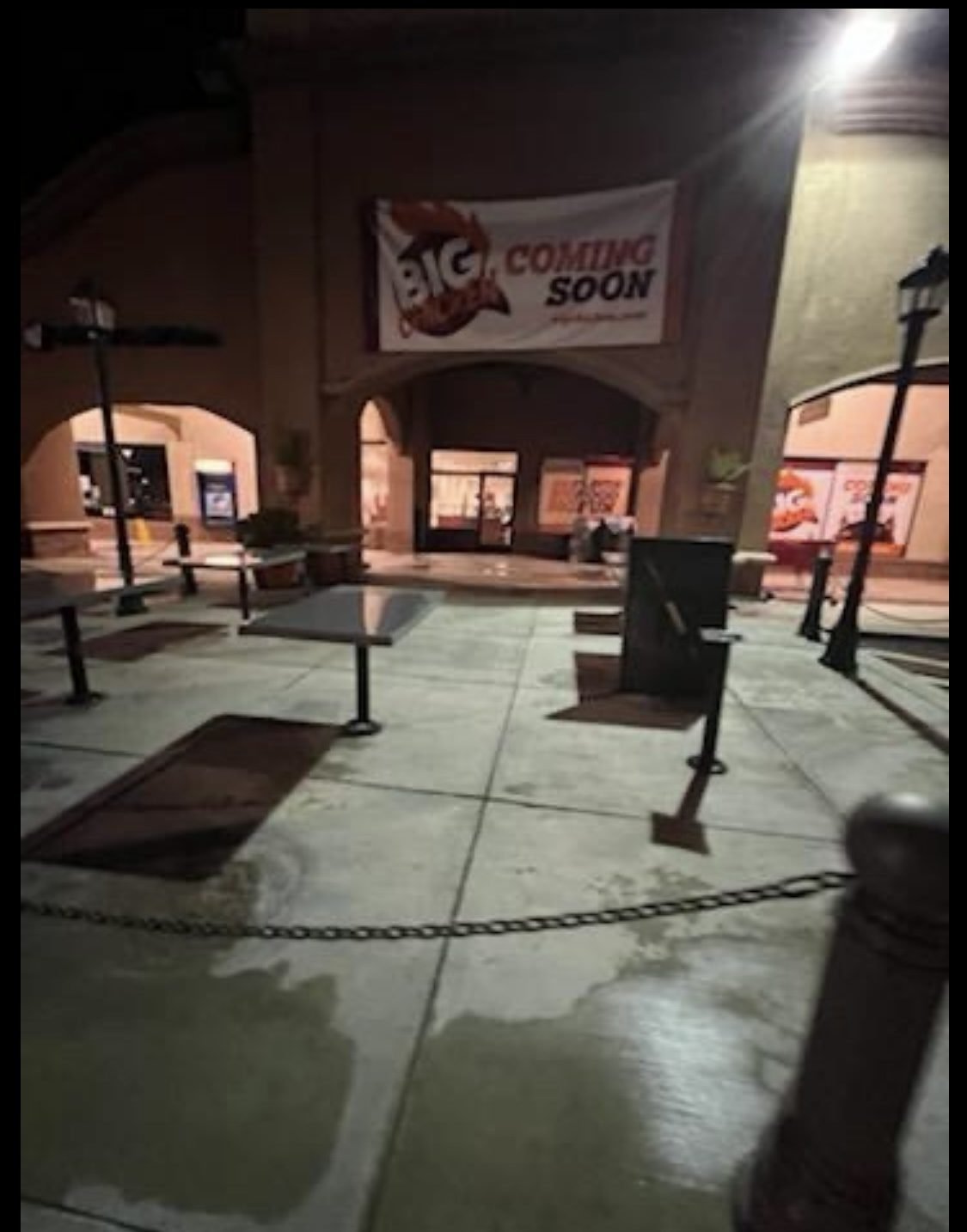
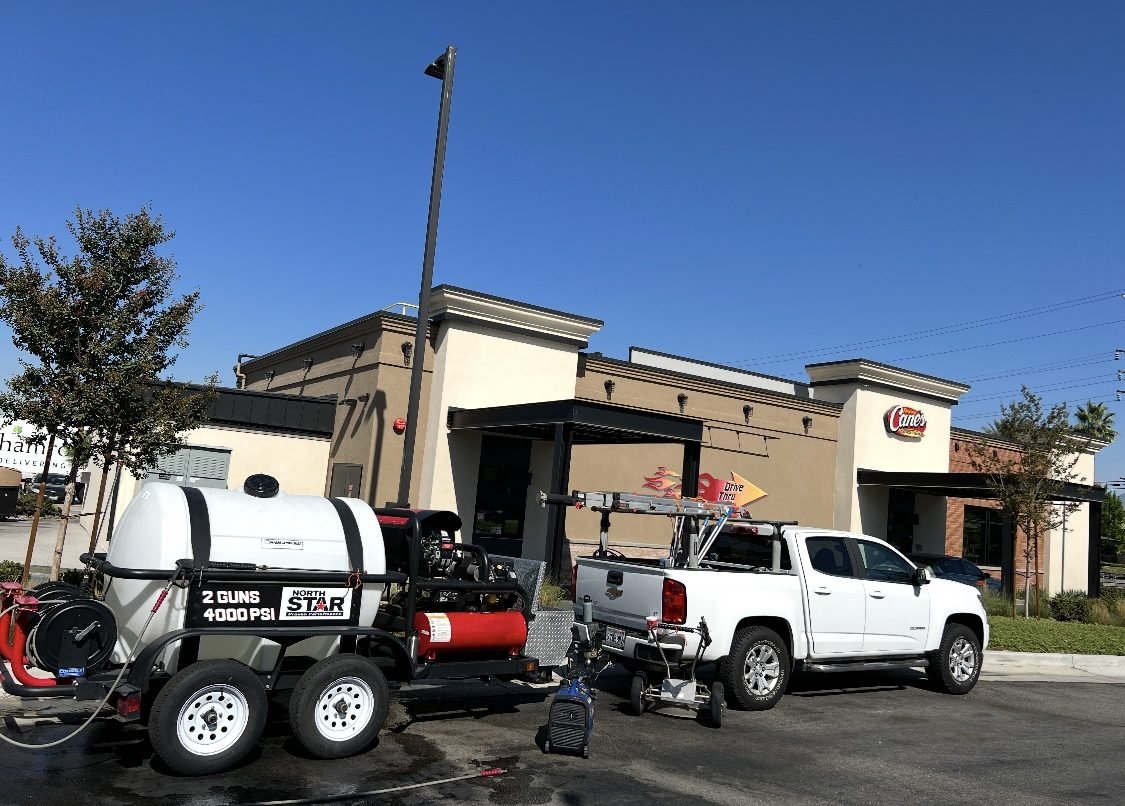
Real Northern California Project Work
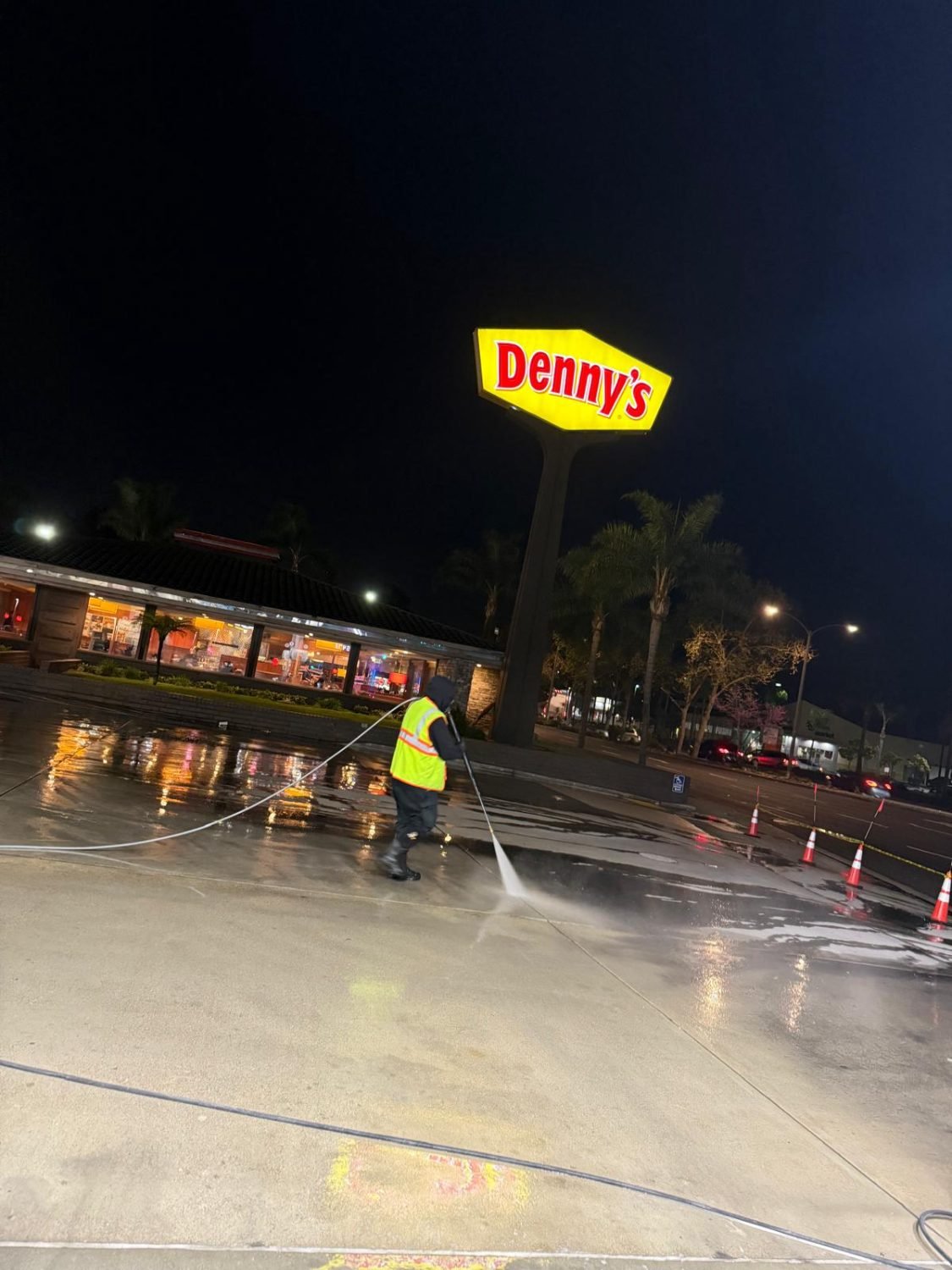
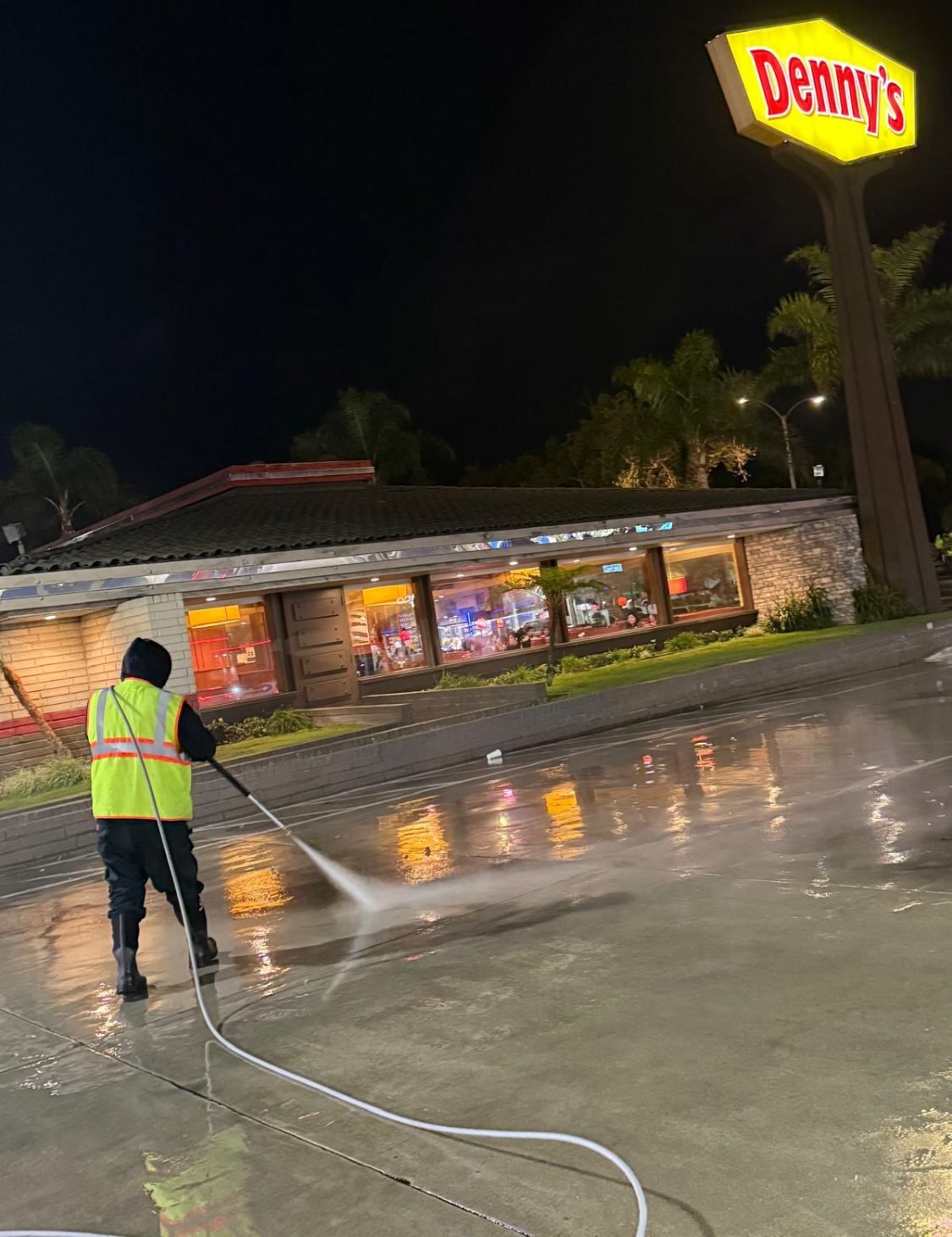
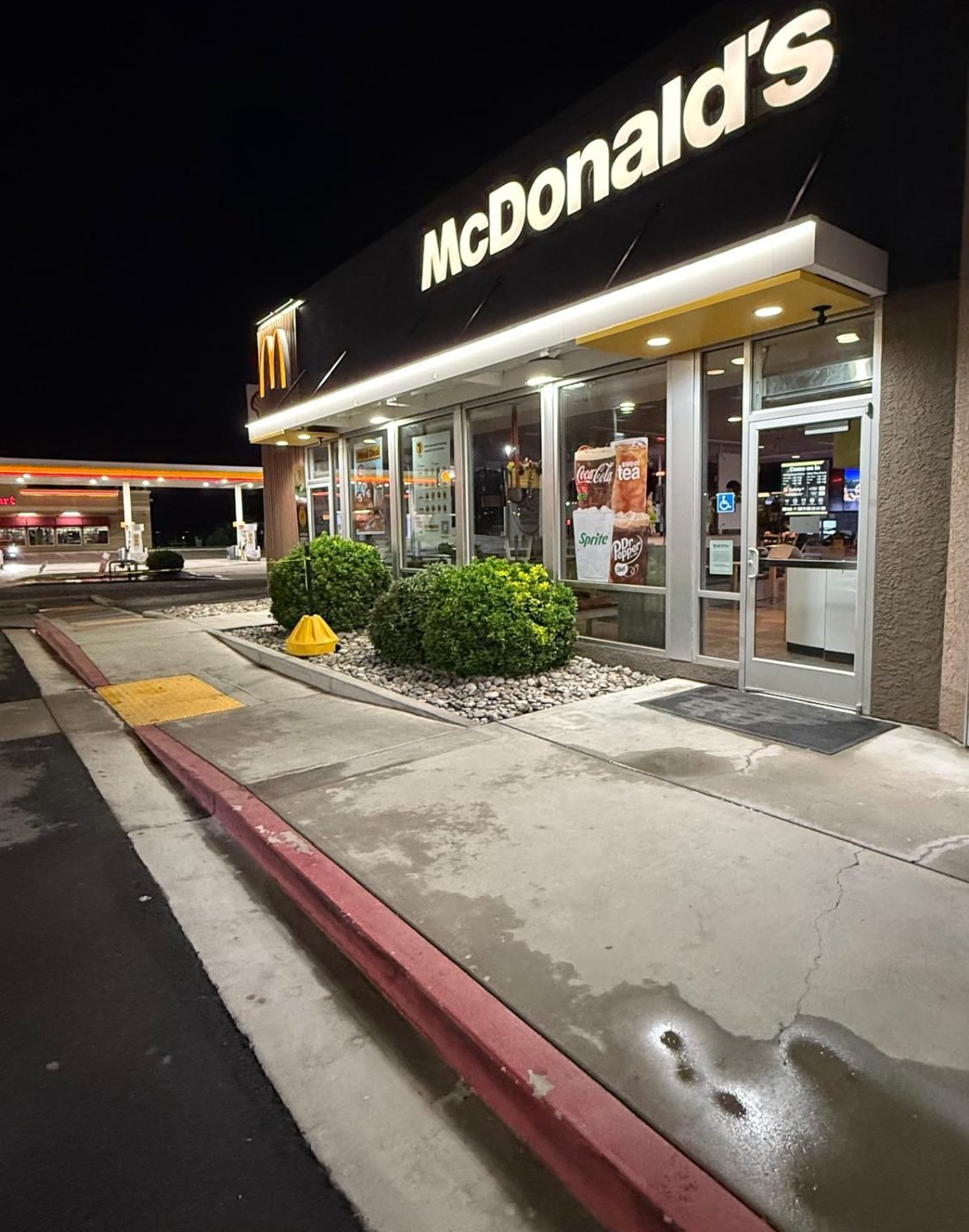
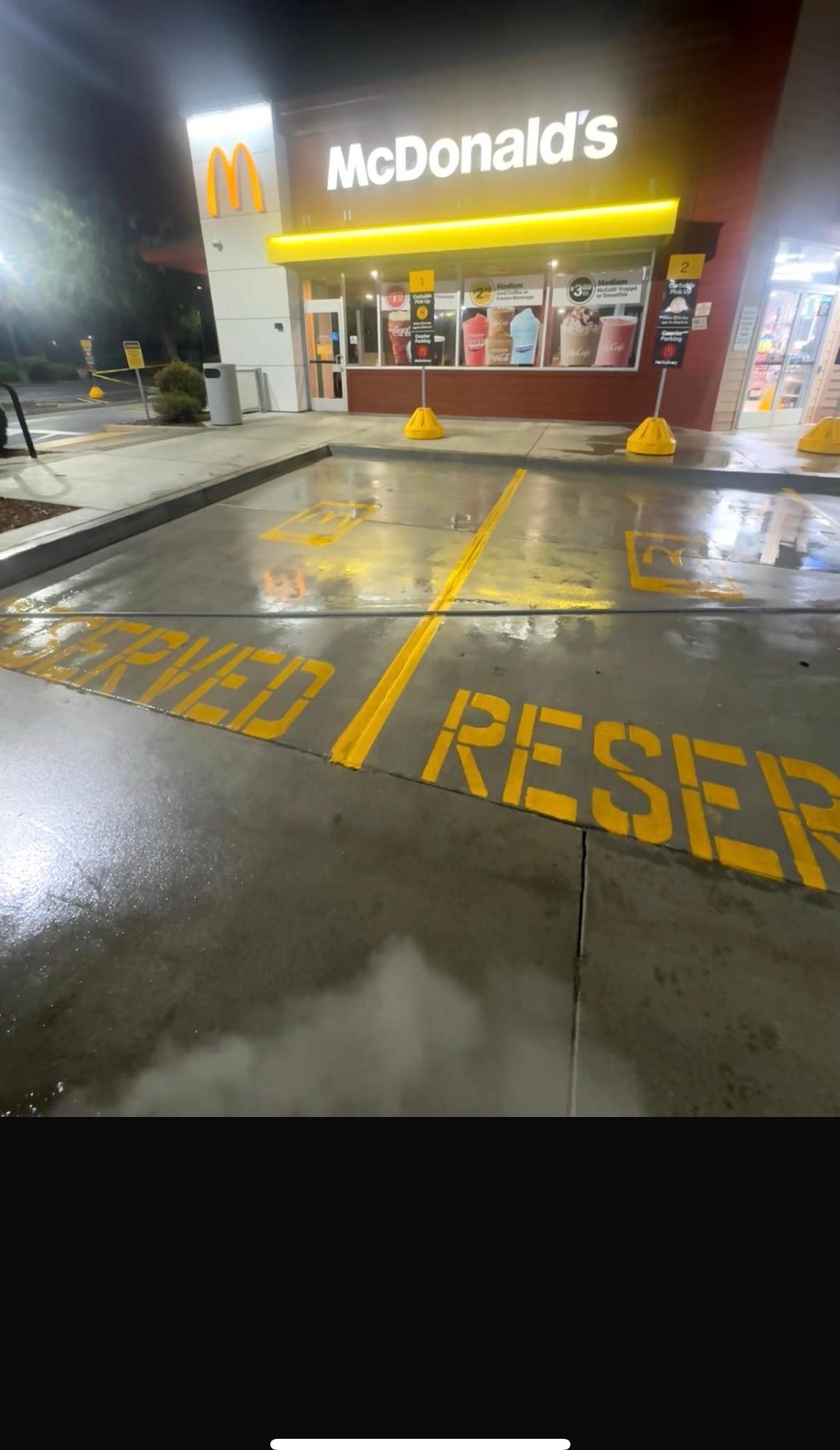
Original project photography from Power Wash NorCal engagements — our jobs, our equipment, our camera.
How Our Services Apply to Drive-Thrus
Drive-Thru Cleaning
The core service — full lane, order point, and window-zone treatment.
Power Washing
Heated water for the grease-heavy window apron and food fallout zones.
Concrete Cleaning & Oil Stain Removal
Drip-line and stop-point stain treatment along the queue.
Pressure Washing
Adjacent curbs, islands, and menu-board surrounds.
Sidewalk Cleaning
The pedestrian crossings where the lane meets walkways.
Parking Lot Cleaning
The escape lane, bypass, and mobile-pickup stalls tied to the drive-thru flow.
Our Cleaning Methods for Drive-Thrus
Lane cleaning is a heat-and-chemistry job: degreaser pre-treatment on the drip lines and stop points, hot-water surface cleaning down the full lane for a uniform finish, and detail work at the order point and window apron where fallout is heaviest. Tire film at braking zones gets targeted attention to restore texture. Striping is cleaned, not stripped — pressure and technique are set to brighten markings without lifting paint.
Recommended Cleaning Frequency
Busy lanes hold appearance on a monthly cycle; moderate-volume lanes on a quarterly one. Stop points and the window apron rebuild fastest and are treated most intensively each visit. Many operators sync lane service with their dumpster-pad cycle so both high-frequency needs share one visit.
Typical Contaminants
- Engine oil and coolant at idle and stop points
- Grease film radiating from the pickup window
- Spilled drinks and condiments at the handoff zone
- Rubber and tire-film darkening at braking points
- Gum and litter grime at the order point
Benefits of Professional Cleaning
- The customer's slowest, closest look at your pavement made presentable
- Striping and directional markings visible again after grime removal
- Skid resistance restored where cars brake around pedestrians
- Overnight service that never interrupts lane revenue
- A focused scope that keeps recurring cost proportional to the lane itself
Protecting Property Value
The drive-thru lane is often the most valuable pavement on the parcel — the strip that generates the majority of a QSR's revenue — and it's also the fastest-degrading. Oil penetration, tire polish, and thermal load age lane concrete years faster than the surrounding lot, and lane replacement means trenching through the exact infrastructure the business runs on. Recurring lane cleaning is the cheapest form of capital protection the site has: it intercepts the contaminants that shorten pavement life and preserves the striping and markings that keep the lane insurable and efficient.
Safety Considerations
Drive-thru lanes put slow-moving vehicles, leaning staff, and walking customers within feet of one another. Oil at braking points reduces stopping traction; grease below the window sits exactly where employees reach across pavement; and obscured markings blur the lane's pedestrian crossings. Recurring lane cleaning directly addresses all three.
Maintenance Recommendations
The lane rewards a short, repeating cycle far more than occasional deep cleans — oil that's weeks old lifts substantially, while oil that's aged a year has penetrated the concrete for good. A monthly or quarterly standing visit, timed overnight, keeps the lane at a maintained baseline and preserves the striping investment underneath.
Long-Term Maintenance & Seasonal Planning
Long term, a lane's cleaning cycle should be re-tuned as its volume changes — a store whose car count grows twenty percent needs its lane cycle tightened before the appearance shows it. Seasonally, summer is the lane's hardest season: heat softens deposited oil into the concrete and iced-drink season multiplies spills at the window, so hold the monthly cycle firmly from late spring on. Before fall rains, treat the drip lines so storms don't carry them across the site. And treat every restriping as a planning trigger: cleaning immediately before restriping doubles the paint's adhesion and life, making the two services natural partners on the calendar.
Why Power Wash NorCal
Commercial-grade equipment, experienced crews, and programs built around your operation — serving drive-thrus properties across Northern California. About our company.
Drive-Thrus: Frequently Asked Questions
Is drive-thru cleaning only for restaurants?
No — coffee chains, pharmacies, and bank drive-ups accumulate the same wheel-path oil and stop-point film, and are serviced on the same program.
Will cleaning restore faded striping?
Cleaning removes the grime hiding striping, which often restores visibility significantly; paint that has genuinely worn away needs restriping, which the cleaning also preps for.
How long does a lane service take?
Most single lanes are completed in one to two overnight hours, including the order point and window zone.
Can old oil drip-lines be removed completely?
Recent staining lifts well; drip-lines aged a year or more typically lighten dramatically but may leave shadow, which is the strongest argument for a recurring cycle.
Related Services
Related Industries
Where We Serve Drive-Thrus
Restaurant & Food Service Authority Center
The complete reference for restaurant exterior condition — grease as a site-wide system, entries and patios, drive-thru lanes, enclosures, safety exposure, and frequencies by zone.
Restaurant & Food Service Center
The full restaurant exterior maintenance reference, with frequency guidance by zone.
Grease Migration
The three routes grease reaches exterior surfaces, and why containment beats cleaning.
Restaurant Inspection Checklist
A printable route with the daily walk separated from the periodic inspection.
Working With Us on Commercial Property
The questions property and facility managers raise before engaging a vendor.
Can the work be completed overnight or outside business hours?
Yes. Night, weekend, and off-hours scheduling is standard on commercial property, and a substantial share of our work is done outside trading hours. Overnight windows are usually the right answer where the surface sits under customer or tenant traffic all day — forecourts, entries, drive-thru lanes, plazas, and service corridors.
Can service be scheduled around tenants and occupied operations?
Yes, and it is the normal case rather than the exception. Scheduling is coordinated around business hours, tenant activity, and facility operations, with access windows and constraints agreed before a date is set. On multi-tenant property, the sequence and notice arrangements are usually worked out with the property manager rather than imposed.
Can multiple properties or a whole portfolio be serviced?
Yes. Portfolios are a core part of what we do — the same specification applied across sites, with scheduling sequenced so properties are not competing for the same window. Consistency across a portfolio depends on writing the standard once and applying it per site, rather than negotiating each property separately.
How are recurring maintenance programs handled?
A recurring program sets the surfaces, the frequency per surface, and the trigger conditions for work outside the cycle, then schedules against your operating calendar. Frequencies differ by surface and property type — a drive-thru lane and an office elevation do not belong on the same interval — so the program is built from the property rather than from a package.
Can the work be performed without disrupting operations?
Usually, though it depends on the area. Most exterior surfaces can be worked in sections, phased, or scheduled outside operating hours so that access is never fully lost. Some areas genuinely cannot be closed at any time, and where that is the case the work is planned around short segments with an agreed stop-and-clear procedure rather than pretending the constraint is not there.
What happens if the results are not what was expected?
Work is reviewed against the agreed scope on site before the crew leaves, and anything outstanding is raised at that point. We do not advertise guaranteed removal outcomes — results depend on surface type, condition, the age of the staining, and access — so expected results are confirmed after the surface has been reviewed rather than promised in advance.
Our Process, Start to Finish
The same sequence on every commercial property, whether it is one surface or a portfolio.
Initial Contact
You send the property details. A team member responds by phone or email the same or next business day.
Site Evaluation
Where the scope needs it, we walk the property — surfaces, access, drainage, and the operating constraints around them.
Written Scope
You receive a written scope and estimate covering the surfaces, the method, and the schedule assumptions behind the price.
Scheduling
Work is scheduled around business hours, tenant activity, and facility operations — including nights and weekends where that fits better.
Site Preparation
Access, staging, water source, and wash-water capture are confirmed before equipment comes off the truck.
Service Execution
Method follows the surface and the buildup — unheated pressure washing, heated power washing, or a combination, assessed rather than assumed.
Quality Review
The work is reviewed against the agreed scope before the crew leaves, and anything outstanding is identified rather than left to be found later.
Documentation
A written record of the visit goes to the property file, so the maintenance history is available when it is needed.
What to Expect
What Happens After You Request a Quote
No sales sequence, no obligation. Here is the actual sequence.
- Same or next business day
- A team member reaches out by phone or email to confirm what you need and where the property is.
- A walk-through, a written scope, or a program proposal
- Whichever fits where you are. A single surface may only need a phone conversation; a portfolio usually warrants walking at least one site.
- Scheduling around your operation
- Access windows, tenant activity, delivery patterns, and after-hours constraints are agreed before a date is set — not discovered on the morning of the work.
- Arrival and setup
- The crew confirms access, staging, water source, and wash-water capture on arrival. As a mobile provider we bring the equipment and water handling to the property.
- Review before the crew leaves
- Work is checked against the agreed scope on site. Anything outstanding is raised at the time rather than left for you to find.
- A written record for the property file
- Every visit is documented, so the maintenance history exists when a lender, insurer, owner, or incoming manager asks for it.
What we don't do: we don't advertise guaranteed same-day arrival or guaranteed removal outcomes. Cleaning results depend on surface type, surface condition, the age of the staining, and site access — so timing and expected results are confirmed after the surface has been reviewed, not before.
How We Work on Occupied Commercial Property
- Commercial onlyProperties and portfolios are all we serve. No residential work, so scheduling and methods are built for occupied commercial sites.
- Scoped before work beginsSurface type, buildup, and the property's operating schedule determine the method — assessed on each job rather than applied from a template.
- Scheduled around operationsNight, weekend, and after-hours work where that protects trading hours, tenant activity, or facility operations.
- Wash-water handledCapture and compliant disposal built into the scope on surfaces that require it, rather than treated as an afterthought.
- Documented every visitA written record for the property file, so the maintenance history is available when it is asked for.
- Mobile across Northern CaliforniaWe travel to the property — 25 counties and 183 communities, with no storefront for you to visit.
Request a property assessment
We'll review the property against how this industry actually uses its exterior, and respond with next steps.
Request a Free Estimate Today
Contact Power Wash NorCal for a complimentary, no-obligation estimate and a maintenance program built for your operation.
Request a Commercial Quote