

Commercial Exterior Cleaning for Distribution Centers
High-velocity distribution center cleaning — hundred-door dock lines, trailer yards, and 24/7 operations serviced without slowing throughput.
- 🏢100% commercialProperties and portfolios are all we serve — no residential work.
- 📍All of Northern California25 counties and 183 communities covered.
- 🌙Off-hours schedulingNight, weekend, and after-hours work around your operation.
- 📋Per-visit documentationWritten record for every property file.
Distribution Centers: Industry Overview
Distribution centers are warehouses at maximum velocity: dock lines running dozens or hundreds of doors, trailer yards cycling around the clock, and throughput metrics that make every idle door a measured cost. Exterior buildup scales with that velocity — more trailer positions dripping hydraulic oil, more yard-truck turns polishing the same concrete, more compactor volume — while the operation's tempo leaves no natural pause to clean it.
Power Wash NorCal services distribution centers across the Central Valley and greater Northern California with throughput-first programs: door groups cleaned against the facility's live receiving board, yard sections rotated without surrendering staging capacity, and every visit planned with operations rather than imposed on them.
Common Cleaning Challenges
At DC scale, ordinary warehouse buildup multiplies across hundreds of positions — and the operation's uptime requirements govern everything.
- Hydraulic drip accumulation across very long dock door lines
- Trailer yards cycling 24/7 with no idle cleaning window
- Yard-truck turn paths polished slick by constant repetition
- Compactor and bale volume far beyond typical warehouse levels
- Corporate uptime metrics that penalize any door taken offline
Request a Free Estimate
Ready to discuss an exterior cleaning program for your distribution centers property?
Request a Commercial QuotePlan Your Program
See our Warehouse Exterior Cleaning Guide for scheduling and budgeting guidance.
Not sure which method your surfaces need? Read Power Washing vs. Pressure Washing.
Real Northern California Project Work
Original project photography from Power Wash NorCal engagements — our jobs, our equipment, our camera.
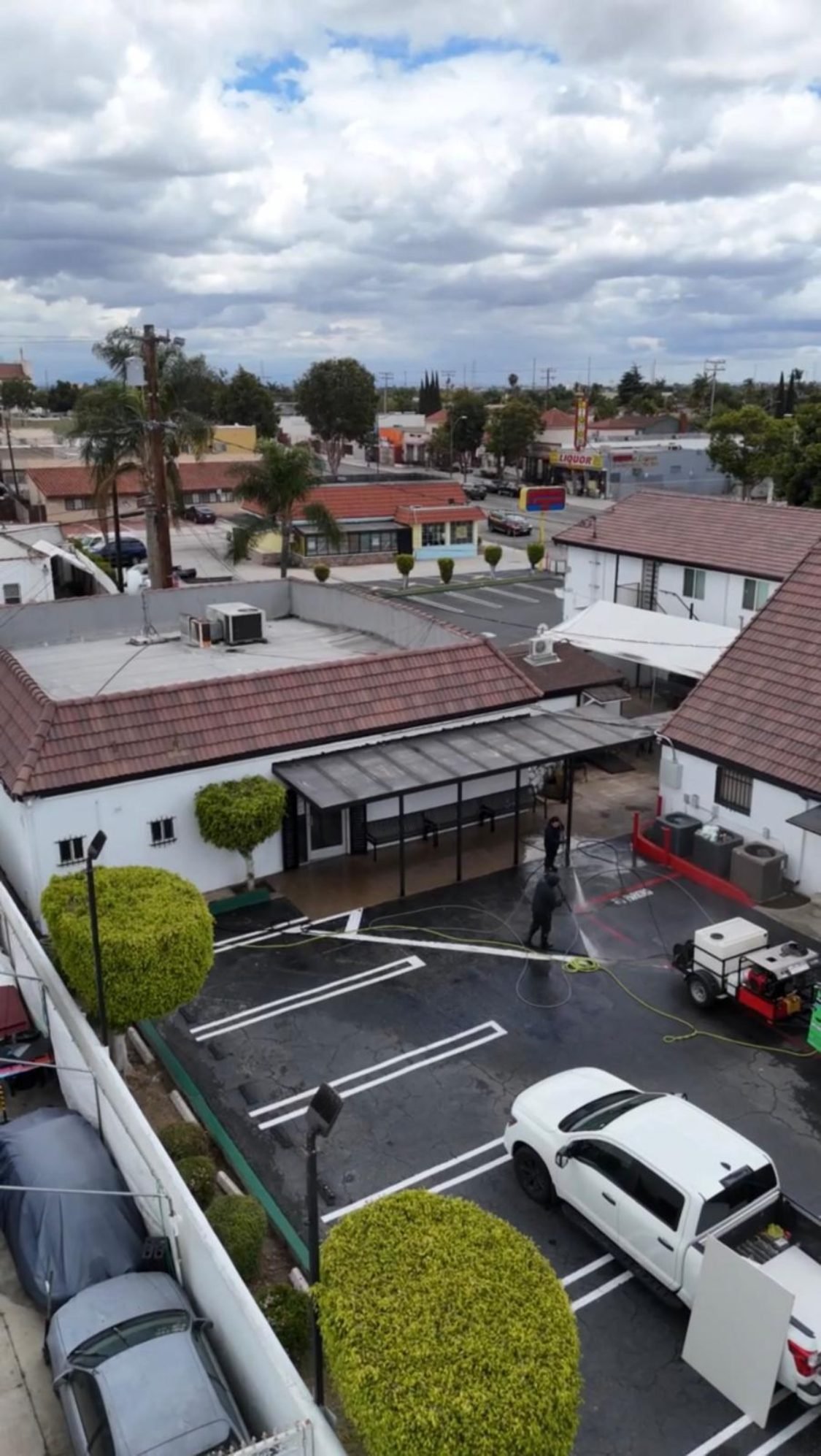
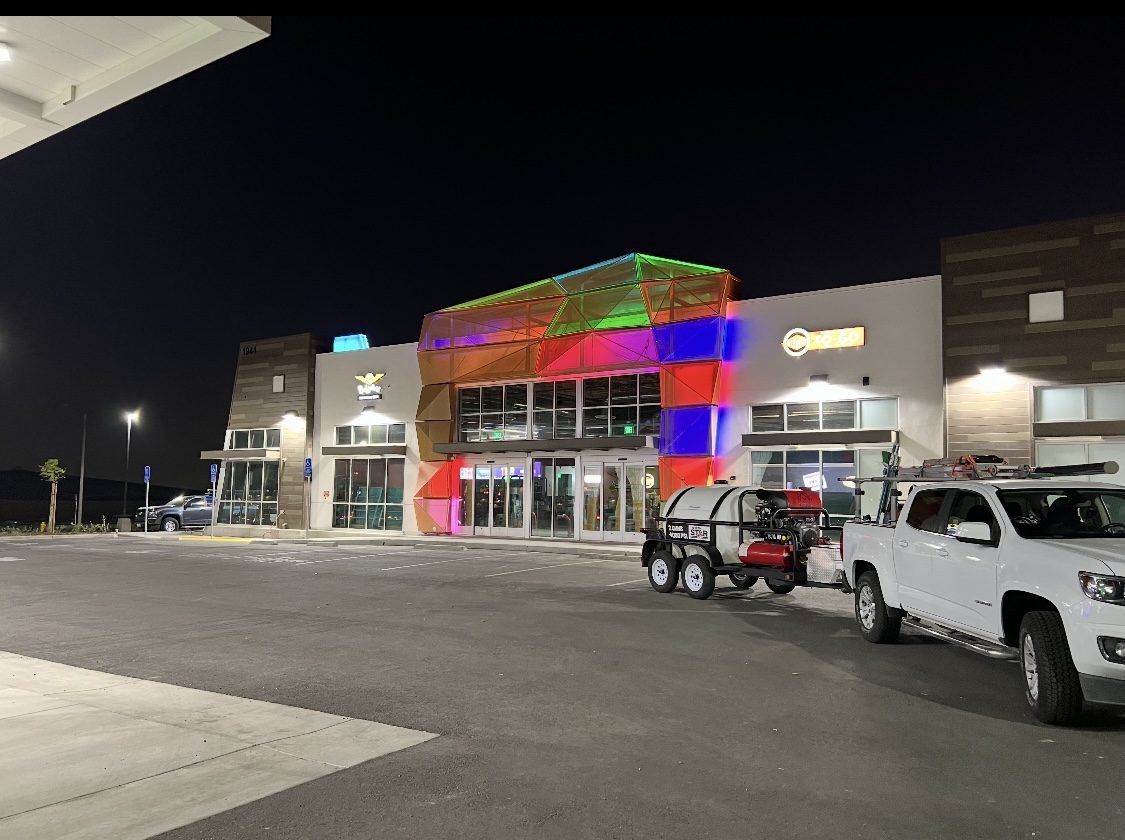
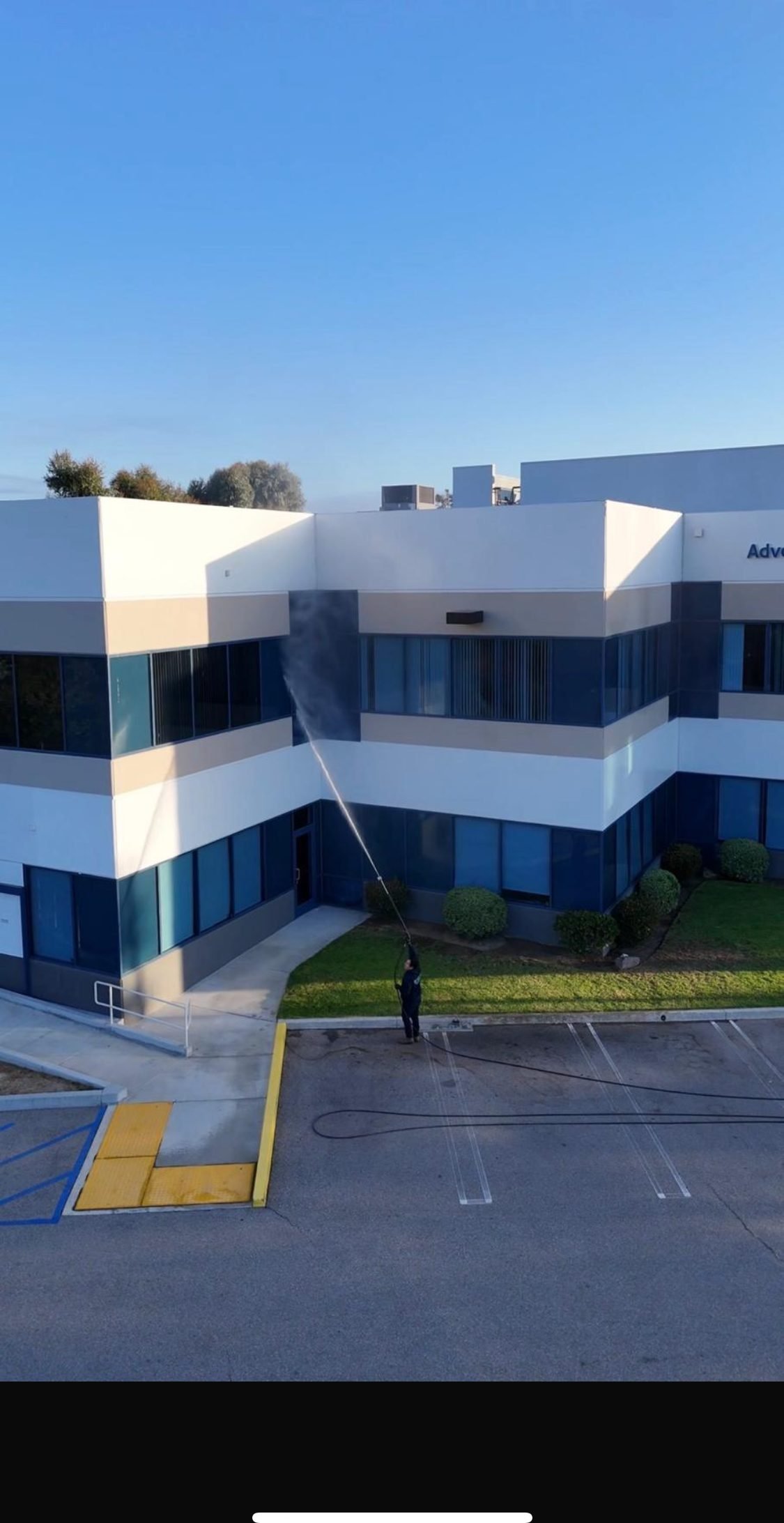
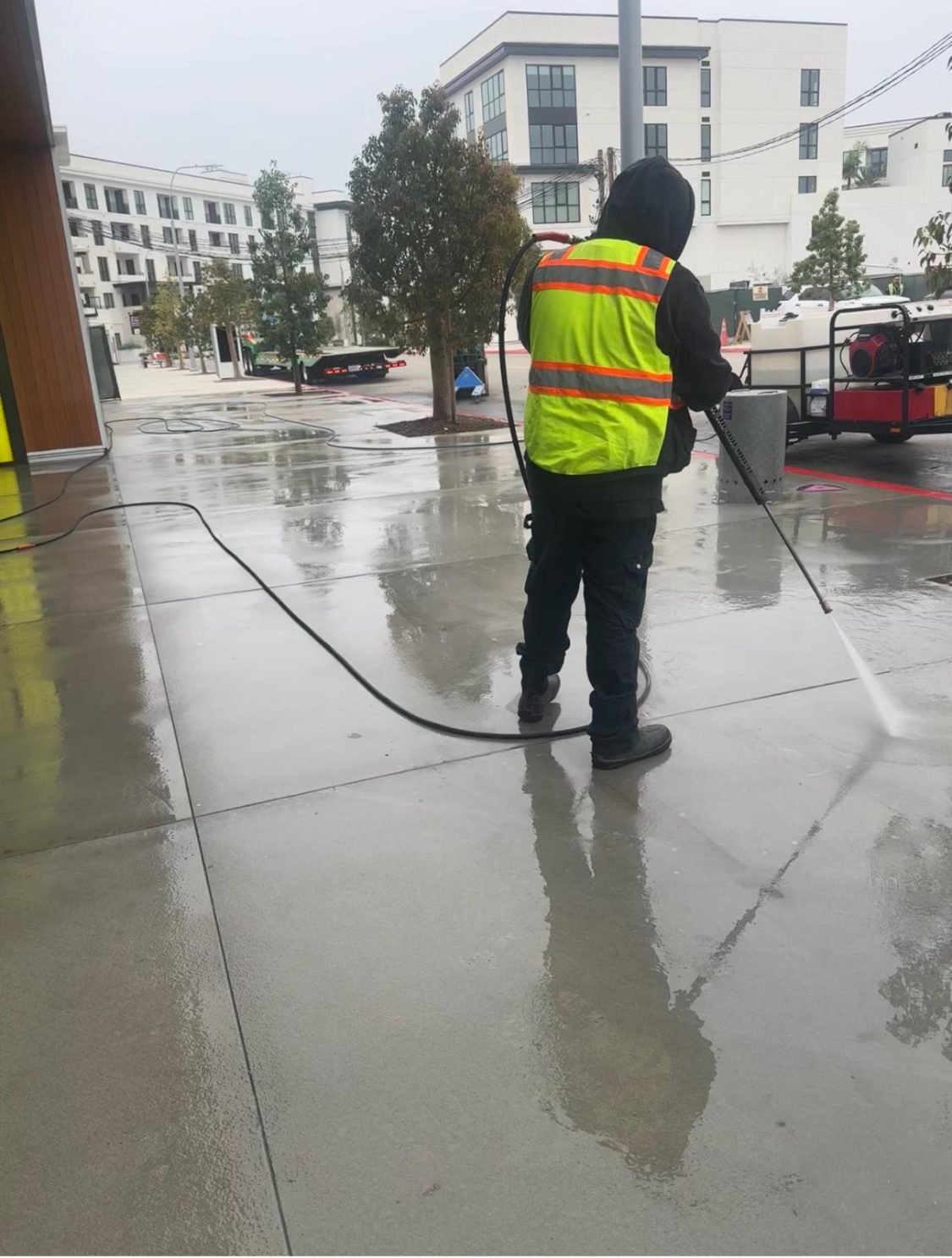
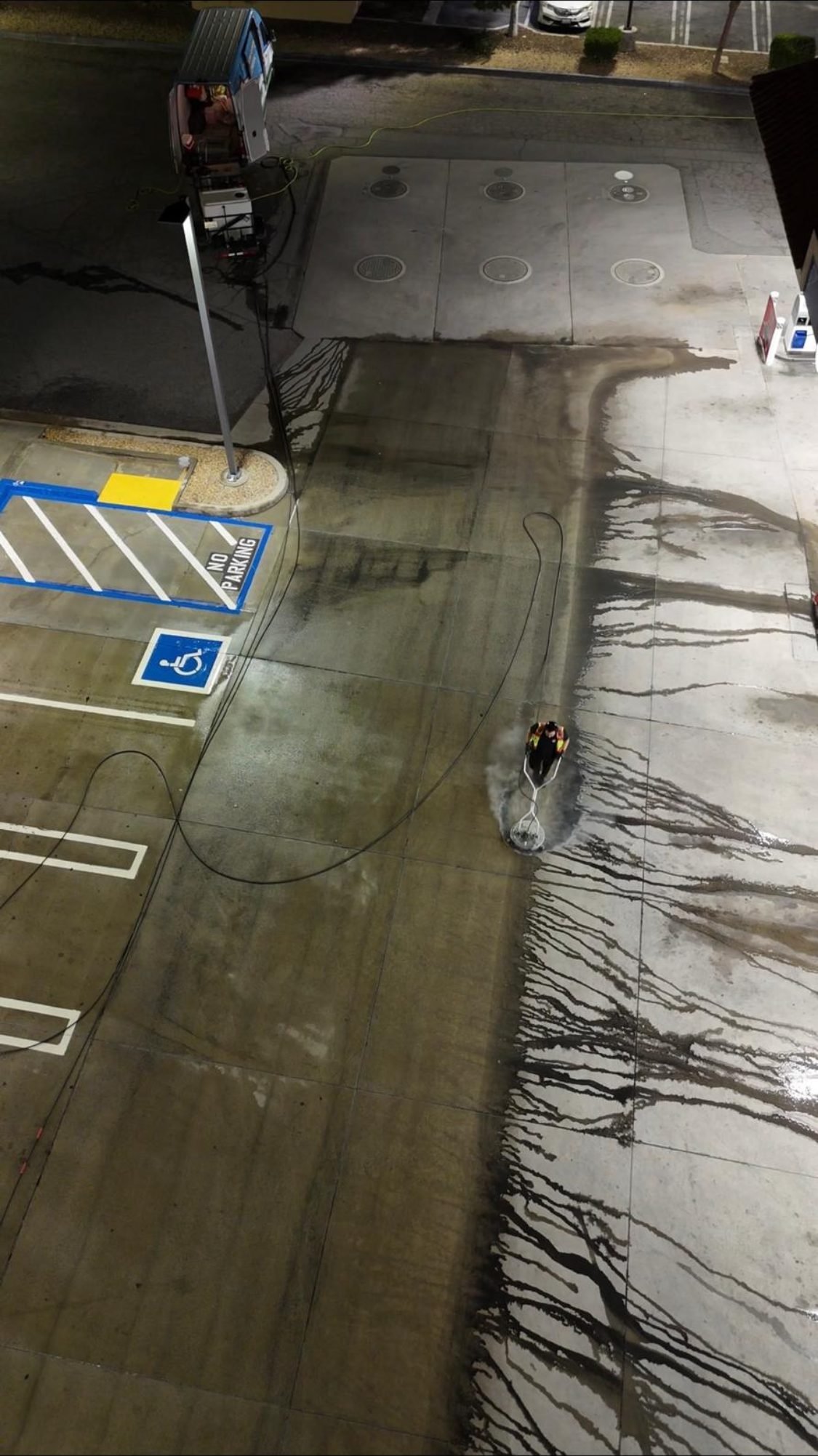
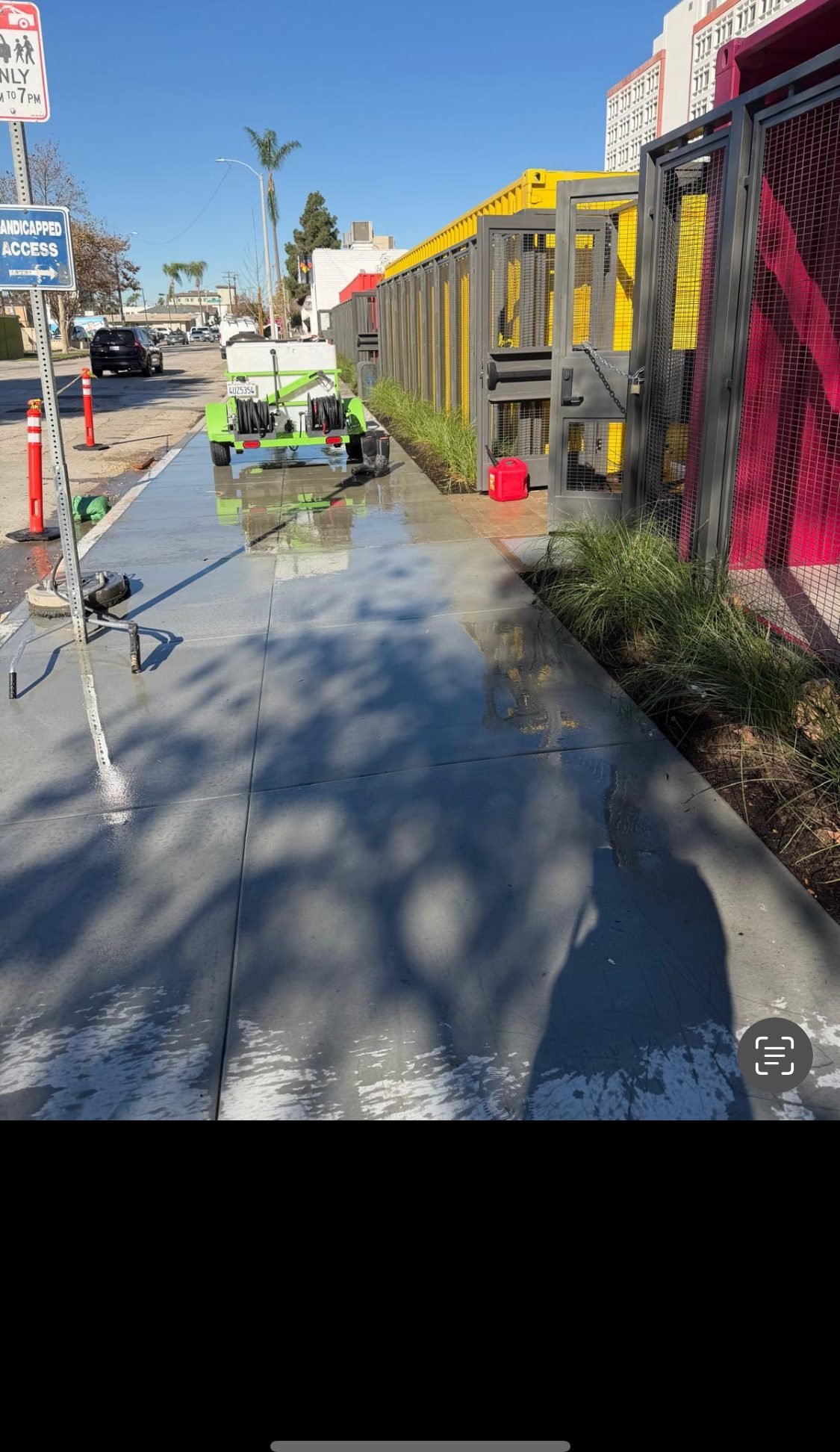
How Our Services Apply to Distribution Centers
Warehouse & Industrial Pressure Washing
The core service scaled to dc courts, yards, and elevations.
Power Washing
Heated degreasing across dock aprons and trailer positions in door groups.
Concrete Cleaning & Oil Stain Removal
Drip-line and turn-path treatment across the yard's fixed routes.
Dumpster & Dock Area Cleaning
Compactor, bale, and waste-corral service at dc volume.
Building Exterior Cleaning
Long tilt-up elevations and office-entry frontage.
Parking Lot Cleaning
Large employee lots serving multi-shift workforces.
Sidewalk Cleaning
Guard-shack approaches, break areas, and designated walking routes.
Our Cleaning Methods for Distribution Centers
DC work runs like the facility does — in scheduled waves: pre-treatment crews move down the door group ahead of hot-water units, surface machines follow for uniform finish, and the group is released back to the yard office before the next begins. Yard sections use the same wave pattern at larger scale. Equipment is staged outside hostling paths, lighting is supplemented where overnight work requires it, and every wave ends with a dry, open surface.
Recommended Cleaning Frequency
DC dock lines typically run a rolling quarterly cycle — a share of the door groups each visit, covering the full line across the quarter. Yards rotate semi-annually by section; compactor zones monthly; employee lots and walls on annual or semi-annual cycles. The rolling model keeps every visit small against the operation.
Typical Contaminants
- Hydraulic fluid at hundreds of trailer positions
- Diesel, DEF, and reefer-unit drips in staging lanes
- Yard-truck tire film on fixed hostling routes
- Compactor leachate at high-volume waste zones
- Corridor dust filming long tilt-up elevations
Benefits of Professional Cleaning
- Cleaning absorbed into operations with zero measured door downtime
- The dock line covered completely on a predictable rolling cycle
- Yard skid exposure controlled on hostler and pedestrian routes
- A facility that presents to corporate audits and client tours at standard
- Network-level programs and reporting for multi-DC operators
Protecting Property Value
A DC's exterior concrete is throughput infrastructure: dock aprons, ramps, and yard pavement engineered for loads that make replacement both expensive and operationally painful. Hydraulic oil and diesel accelerate that pavement's deterioration precisely where the loads are heaviest. At portfolio scale, the economics compound — a network that standardizes preventive exterior care across facilities defers capital repaving across the entire portfolio, and holds every building at the condition standard institutional owners and corporate real estate teams underwrite.
Safety Considerations
DC yards are the most kinetic exterior environment in commercial property — hostlers repositioning trailers continuously, pedestrians crossing on designated routes, all of it at night under lights. Programs keep the walking routes and dock aprons degreased, stage strictly outside trailer sightlines and fire lanes, and coordinate every section with the yard office in real time.
Maintenance Recommendations
The DC model is the rolling program: door groups, yard sections, and waste zones each on their own cycle, sequenced weekly against the facility's live schedule so cleaning rides the operation's natural gaps. Multi-site networks standardize the model across buildings, with per-facility documentation rolling up to network reporting.
Long-Term Maintenance & Seasonal Planning
DC exterior planning is built around peak season: the rolling dock and yard cycles should complete a full rotation before the facility's ramp-up — for most networks, ahead of Q4 — so the building enters peak at a clean baseline and the program pauses gracefully during the surge. Post-peak, a recovery service addresses what the surge deposited. Fall rains get the same pre-treatment logic as any yard: clear the oil before storms move it. Over the long term, network operators benefit from standardized condition reporting across buildings — it surfaces which facilities' volumes have outgrown their cycles, and builds the pavement-condition history that capital planning at portfolio scale depends on.
Why Power Wash NorCal
Commercial-grade equipment, experienced crews, and programs built around your operation — serving distribution centers properties across Northern California. About our company.
Distribution Centers: Frequently Asked Questions
How many dock doors are cleaned per visit?
Typically a planned share of the line — often 20 to 40 doors in coordinated groups — so the full line completes across the quarter with no operational impact.
Can you work inside a 24/7 operation?
Yes — visits are slotted into the facility's lowest-volume windows and coordinated live with the yard office, section by section.
Do you service multi-building DC campuses and networks?
Yes — campuses and regional networks run one standardized rolling program with consolidated scheduling and per-facility records.
What's different about DC cleaning versus a standard warehouse?
Scale and tempo — more positions generating buildup, tighter uptime constraints, and a rolling-cycle model built to disappear into a high-velocity operation.
Related Services
Related Industries
Where We Serve Distribution Centers
Warehouse & Distribution Center Authority Center
The complete reference for industrial exterior condition — yard and truck court surfaces, dock environments, heavy vehicle wear, safety around active logistics, and frequencies by zone.
Warehouse & Distribution Center
The full industrial exterior maintenance reference, with frequency guidance by zone.
Warehouse Inspection Checklist
A printable inspection route following load paths, docks, drainage, and separation.
Heavy Vehicle Wear
Why axle load rather than vehicle count drives industrial pavement deterioration.
Working With Us on Commercial Property
The questions property and facility managers raise before engaging a vendor.
Can the work be completed overnight or outside business hours?
Yes. Night, weekend, and off-hours scheduling is standard on commercial property, and a substantial share of our work is done outside trading hours. Overnight windows are usually the right answer where the surface sits under customer or tenant traffic all day — forecourts, entries, drive-thru lanes, plazas, and service corridors.
Can service be scheduled around tenants and occupied operations?
Yes, and it is the normal case rather than the exception. Scheduling is coordinated around business hours, tenant activity, and facility operations, with access windows and constraints agreed before a date is set. On multi-tenant property, the sequence and notice arrangements are usually worked out with the property manager rather than imposed.
Can multiple properties or a whole portfolio be serviced?
Yes. Portfolios are a core part of what we do — the same specification applied across sites, with scheduling sequenced so properties are not competing for the same window. Consistency across a portfolio depends on writing the standard once and applying it per site, rather than negotiating each property separately.
How are recurring maintenance programs handled?
A recurring program sets the surfaces, the frequency per surface, and the trigger conditions for work outside the cycle, then schedules against your operating calendar. Frequencies differ by surface and property type — a drive-thru lane and an office elevation do not belong on the same interval — so the program is built from the property rather than from a package.
Can the work be performed without disrupting operations?
Usually, though it depends on the area. Most exterior surfaces can be worked in sections, phased, or scheduled outside operating hours so that access is never fully lost. Some areas genuinely cannot be closed at any time, and where that is the case the work is planned around short segments with an agreed stop-and-clear procedure rather than pretending the constraint is not there.
What happens if the results are not what was expected?
Work is reviewed against the agreed scope on site before the crew leaves, and anything outstanding is raised at that point. We do not advertise guaranteed removal outcomes — results depend on surface type, condition, the age of the staining, and access — so expected results are confirmed after the surface has been reviewed rather than promised in advance.
Our Process, Start to Finish
The same sequence on every commercial property, whether it is one surface or a portfolio.
Initial Contact
You send the property details. A team member responds by phone or email the same or next business day.
Site Evaluation
Where the scope needs it, we walk the property — surfaces, access, drainage, and the operating constraints around them.
Written Scope
You receive a written scope and estimate covering the surfaces, the method, and the schedule assumptions behind the price.
Scheduling
Work is scheduled around business hours, tenant activity, and facility operations — including nights and weekends where that fits better.
Site Preparation
Access, staging, water source, and wash-water capture are confirmed before equipment comes off the truck.
Service Execution
Method follows the surface and the buildup — unheated pressure washing, heated power washing, or a combination, assessed rather than assumed.
Quality Review
The work is reviewed against the agreed scope before the crew leaves, and anything outstanding is identified rather than left to be found later.
Documentation
A written record of the visit goes to the property file, so the maintenance history is available when it is needed.
What to Expect
What Happens After You Request a Quote
No sales sequence, no obligation. Here is the actual sequence.
- Same or next business day
- A team member reaches out by phone or email to confirm what you need and where the property is.
- A walk-through, a written scope, or a program proposal
- Whichever fits where you are. A single surface may only need a phone conversation; a portfolio usually warrants walking at least one site.
- Scheduling around your operation
- Access windows, tenant activity, delivery patterns, and after-hours constraints are agreed before a date is set — not discovered on the morning of the work.
- Arrival and setup
- The crew confirms access, staging, water source, and wash-water capture on arrival. As a mobile provider we bring the equipment and water handling to the property.
- Review before the crew leaves
- Work is checked against the agreed scope on site. Anything outstanding is raised at the time rather than left for you to find.
- A written record for the property file
- Every visit is documented, so the maintenance history exists when a lender, insurer, owner, or incoming manager asks for it.
What we don't do: we don't advertise guaranteed same-day arrival or guaranteed removal outcomes. Cleaning results depend on surface type, surface condition, the age of the staining, and site access — so timing and expected results are confirmed after the surface has been reviewed, not before.
How We Work on Occupied Commercial Property
- Commercial onlyProperties and portfolios are all we serve. No residential work, so scheduling and methods are built for occupied commercial sites.
- Scoped before work beginsSurface type, buildup, and the property's operating schedule determine the method — assessed on each job rather than applied from a template.
- Scheduled around operationsNight, weekend, and after-hours work where that protects trading hours, tenant activity, or facility operations.
- Wash-water handledCapture and compliant disposal built into the scope on surfaces that require it, rather than treated as an afterthought.
- Documented every visitA written record for the property file, so the maintenance history is available when it is asked for.
- Mobile across Northern CaliforniaWe travel to the property — 25 counties and 183 communities, with no storefront for you to visit.
Request a property assessment
We'll review the property against how this industry actually uses its exterior, and respond with next steps.
Request a Free Estimate Today
Contact Power Wash NorCal for a complimentary, no-obligation estimate and a maintenance program built for your operation.
Request a Commercial Quote